描述
New Energy Applications
Key Applications
  • Cell Cushioning & Thermal Insulation
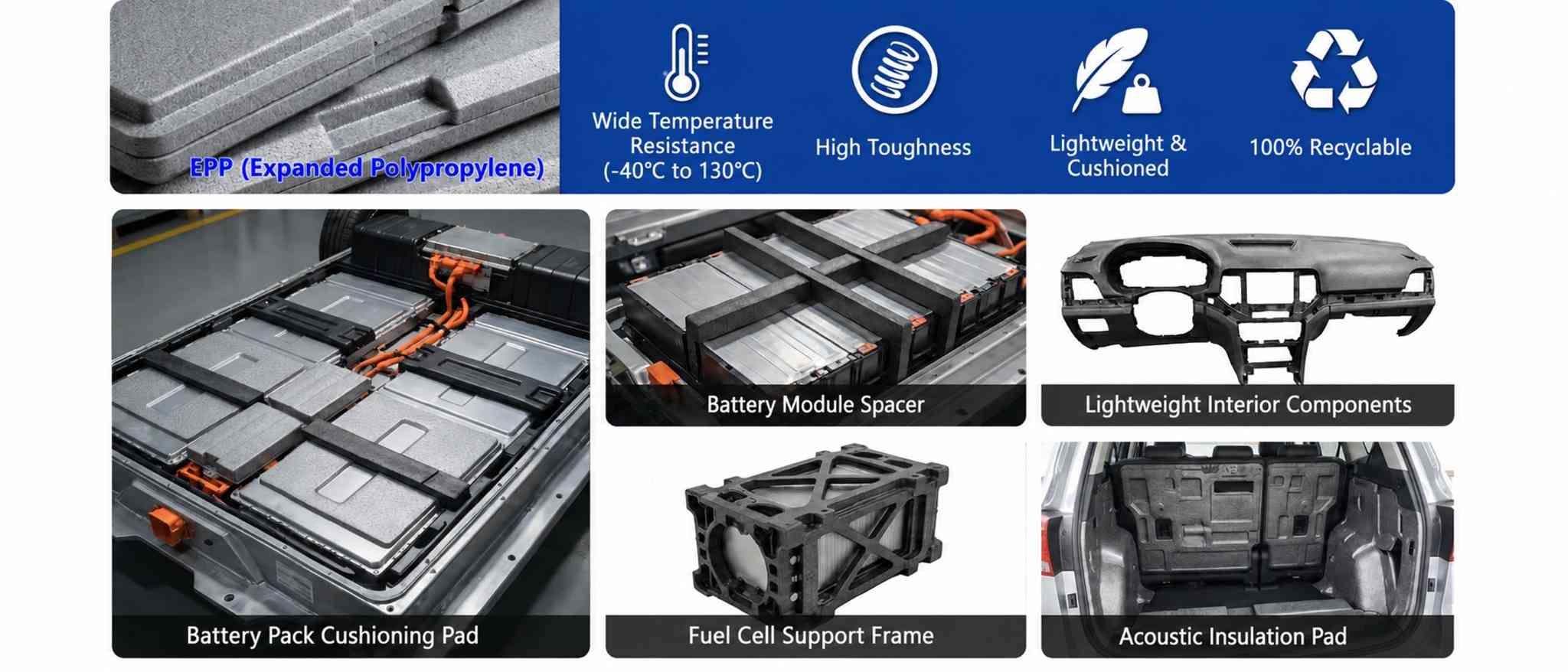
    Materials: EPP (30–50 kg/m³) + MPPE (40–60 kg/m³) composite foam Key Benefits: Absorbs vibration and impact to protect battery cells Provides thermal insulation (λ ≤ 0.038 W/(m·K)) Delays thermal runaway propagation by over 60 seconds Typical Applications: Prismatic, cylindrical, and pouch battery modules, as well as inter-cell spacing structures within battery packs.
  • Battery Module & Pack Protection
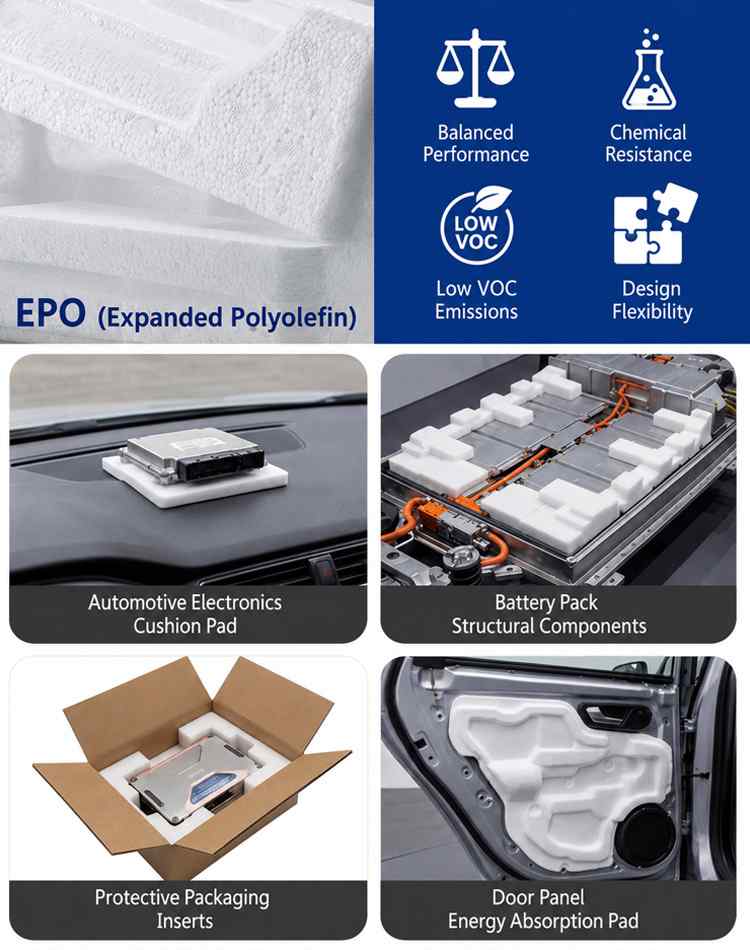
    Material: High-strength EPP (Compressive Strength ≥ 0.3 MPa) Key Benefits: Delivers stable mechanical support under loads exceeding 500 kg Reduces overall weight by 15–30% Absorbs more than 80% of lateral impact energy. Typical Applications: Module base supports, battery pack perimeter protection, and top/bottom packaging inserts.
  • High-Voltage Electrical Insulation
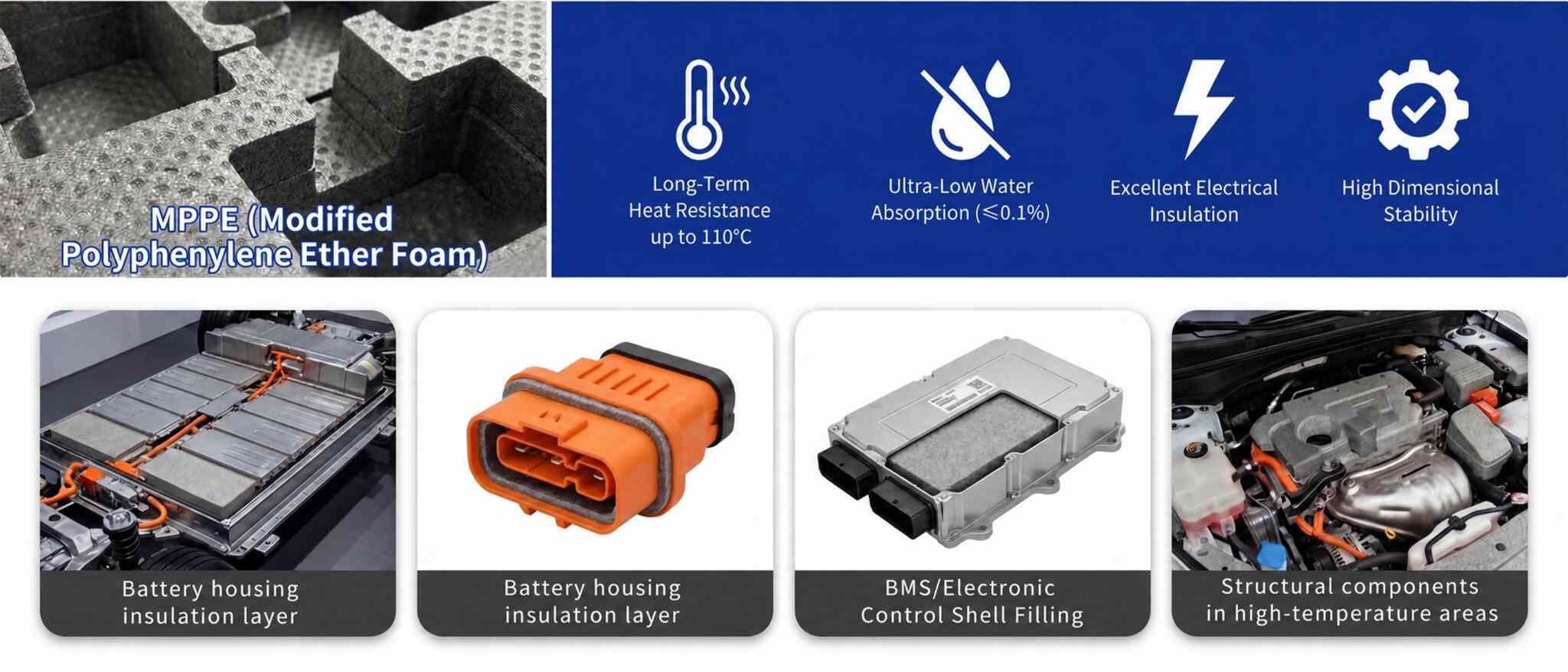
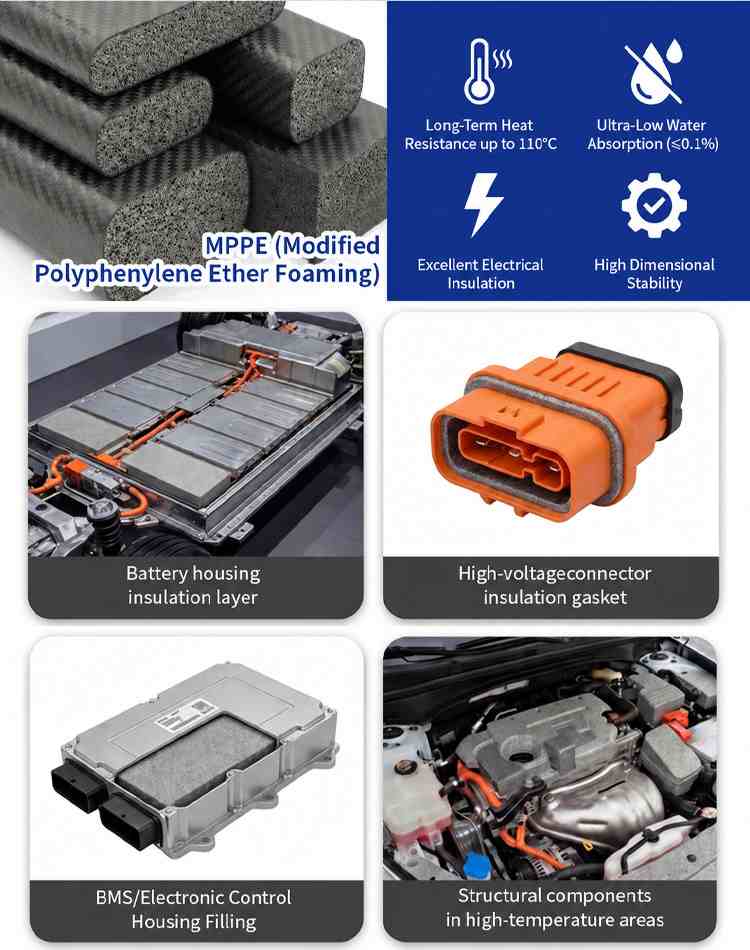
    Material: MPPE Foam (Dielectric Strength ≥ 20 kV/mm) Key Benefits: Provides reliable insulation for connectors, busbars, and fuses from -40°C to 110°C. Ultra-low water absorption (≤ 0.1%) minimizes insulation failure in humid environments Typical Applications: High-voltage junction boxes, Battery Management System (BMS) wiring, and battery pack HV interfaces.
As the core power source of new energy vehicles, battery systems require advanced cushioning, thermal insulation, electrical insulation, and lightweight protection. Jacent delivers integrated material solutions through optimized material selection and customized structural design.
1.Power Battery Systems
  • ECU/BMS Housing Filling & Protection
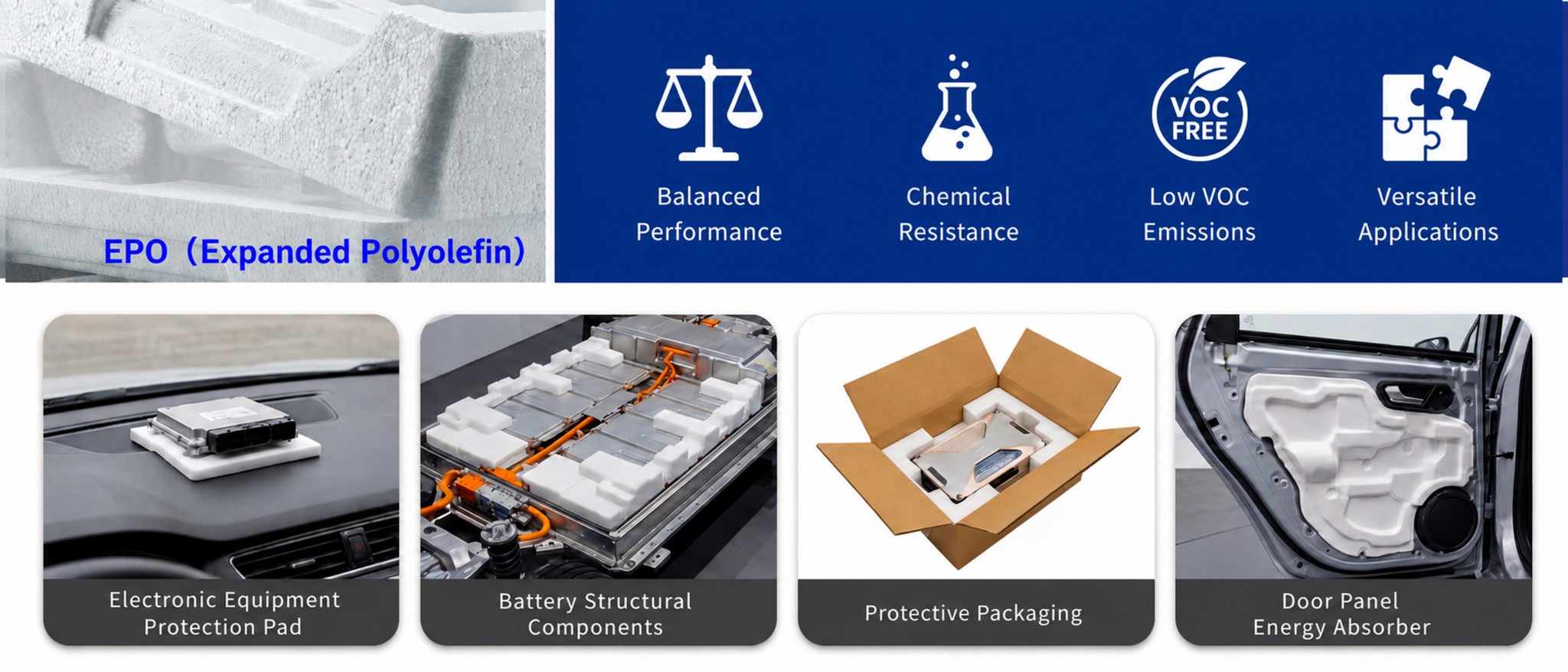
    Material: MPPE/EPO composite (60% MPPE + 40% EPO). Core Functions: Insulates high temperatures in the engine bay (long-term resistance up to 110°C) to prevent overheating failure of electronic components; absorbs driving vibration (attenuates 5–2000 Hz) to reduce the risk of solder joint failure. Additional Benefits: Delivers auxiliary electromagnetic shielding (attenuation ≥15 dB) to reduce external electromagnetic interference; meets low-VOC standards (VOC release ≤100μgC/g) to ensure clean in-vehicle air quality. Applications: Vehicle Control Units (VCUs), Battery Management Systems (BMS), Motor Control Units (MCUs)
  • Sensor / Controller Packaging & Transport
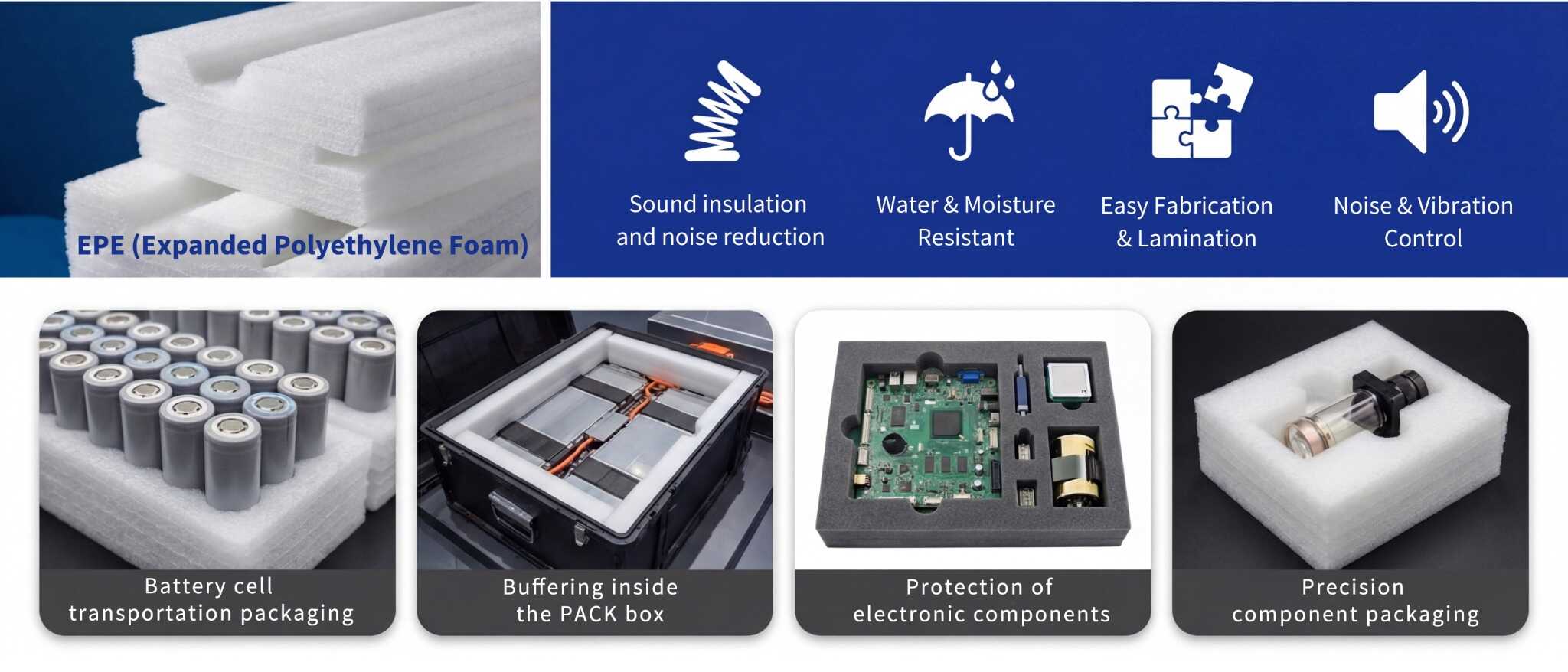
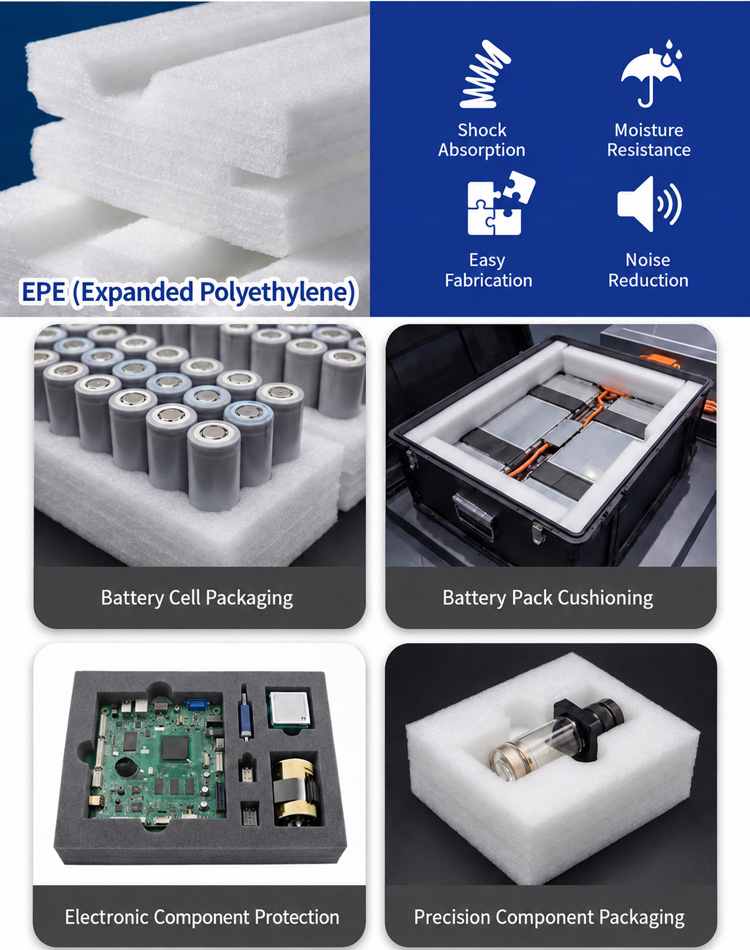
    Material: EPE composite pearl cotton (thickness 5–20 mm, customizable density) Core Functions: Precision-molded inserts fit component contours perfectly, provide soft cushioning (rebound rate ≥90%) to withstand 1.5 m drops without damage, and offer moisture and scratch resistance for precision parts. Process Advantages: Can be laminated with aluminum foil/non-woven fabric to enhance thermal insulation and anti-static performance, adapting to the special requirements of different electronic components. Applications: ADAS sensors, battery temperature/voltage sensors, charging gun controllers.
Automotive electronic components (ECUs, BMS units, sensors, etc.) require exceptional shock absorption, thermal insulation, and interference protection. Jacent's customized foam solutions ensure stable and reliable performance under demanding operating conditions.
2.Automotive Electronics & Control Systems
  • Energy Storage Cabinet Thermal Management
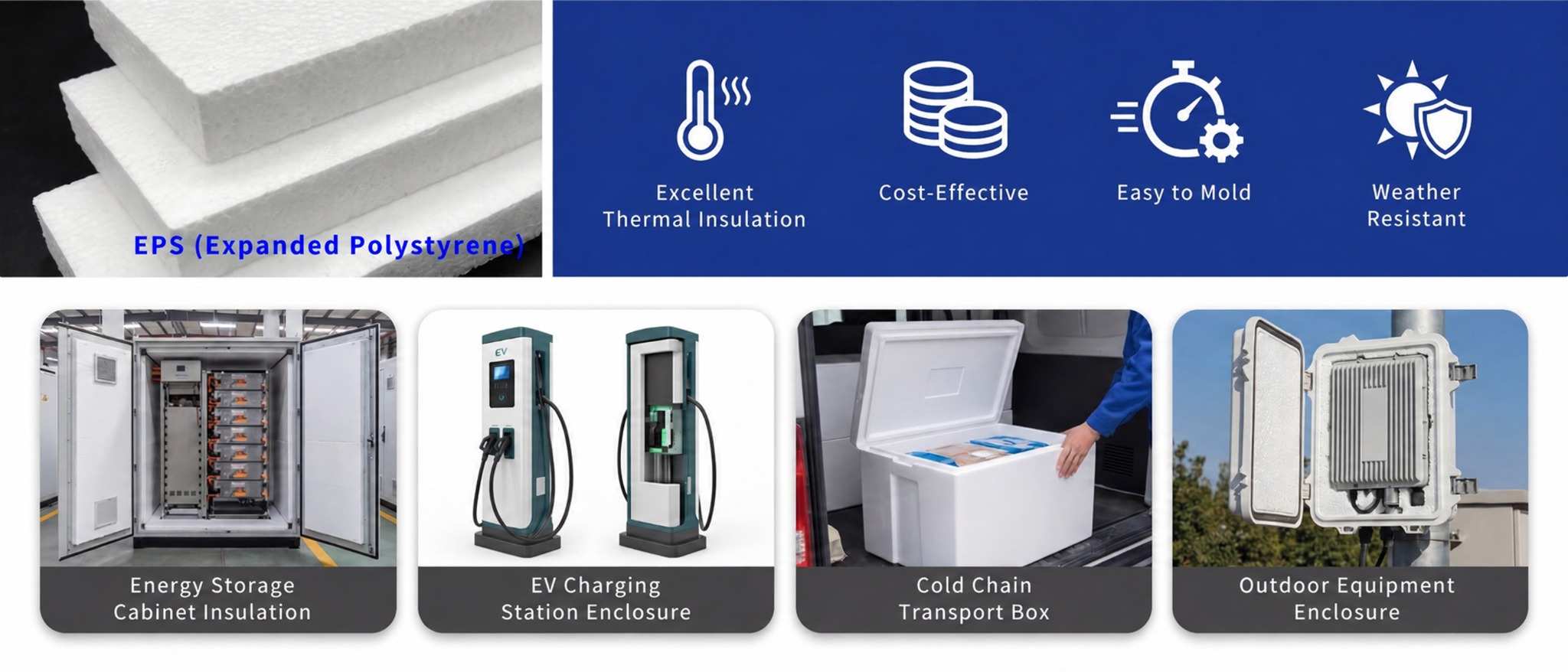
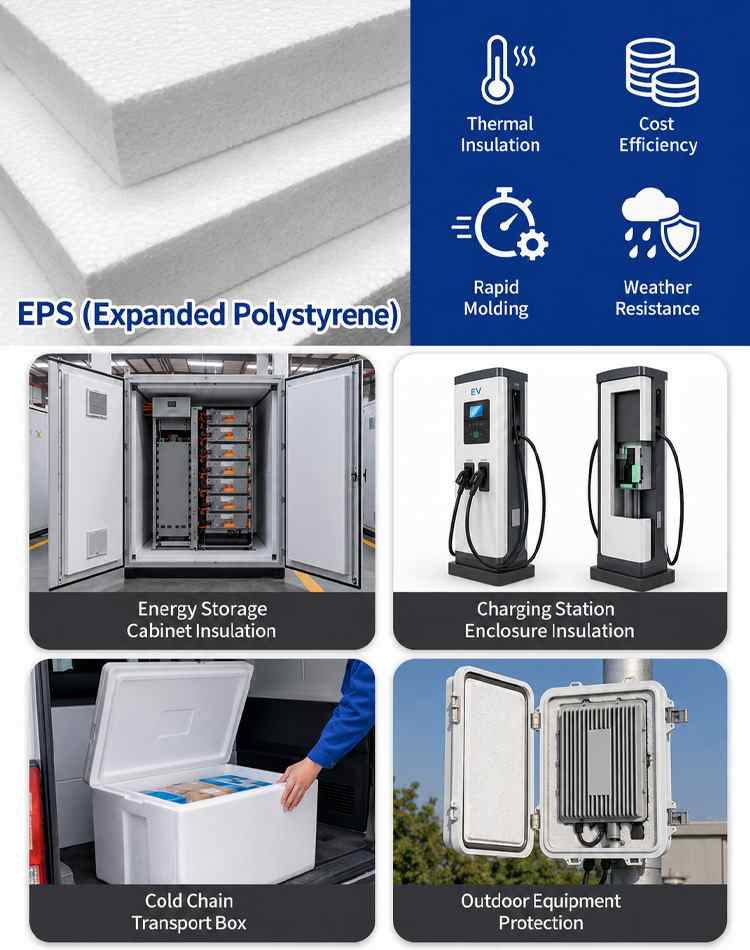
    Materials: EPS foam panels (25–30 kg/m³) + EPP sealing components Key Benefits: EPS insulation (λ ≤ 0.039 W/(m·K)) helps maintain the optimal 15–35°C operating temperature, reducing energy consumption and improving system efficiency. EPP sealing components enhance insulation while providing IP54-rated dust and water protection. Weather Resistance: UV-stabilized EPS resists outdoor aging, while EPP seals retain high elasticity from -30°C to 70°C. Applications: Residential energy storage cabinets, C&I energy storage containers, and battery compartments.
  • EV Charging Station Protection & Support
    Materials: EPS insulation layer + EPP structural components Key Benefits: The EPS insulation layer reduces internal temperatures under direct sunlight, helping prevent module overheating. EPP structural components secure critical parts, absorb impact, and enable lightweight design. Added Value: UL94 V-0 flame-retardant performance and reliable outdoor durability from -30°C to 60°C. Applications: AC charging stations, DC fast chargers, and battery swapping station charging interfaces.
Energy storage cabinets, EV charging stations, and other outdoor equipment are exposed to temperature fluctuations, rain, snow, and UV radiation. Jacent's customized foam solutions provide reliable thermal insulation and protection for demanding outdoor environments.
3. Energy Storage & EV Charging Infrastructure 

  • Lightweight Interior Components
    Materials: EPP foam (20–40 kg/m³) Key Benefits: Replacing conventional plastic and foam parts, EPP is widely used in headrest cores, door panels, seat backs, and headliners, reducing component weight by 30–50% and lowering total interior weight by 5–10 kg to help improve vehicle range. Added Value: Excellent resilience and breathability enhance seating comfort, while low-VOC and odor-free properties meet in-cabin environmental requirements. Applications: Interior components for new energy passenger and commercial vehicles, and fuel cell vehicle seating systems.
  • NVH Acoustic Insulation Solutions
    Materials: EPE/EPP composite layer (EPE 10–15 mm + EPP 5–10 mm) Key Benefits: Used in engine compartment insulation pads, underbody insulation layers, and door insulation panels, the EPE/EPP composite structure absorbs and blocks noise across different frequency ranges, reducing in-cabin noise by 3–8 dB for a quieter driving experience. Process Advantages: Compatible with thermoforming and molding processes, enabling easy integration with complex vehicle body structures. Applications: Engine compartments, underbodies, doors, and luggage compartments of new energy passenger vehicles.
With lower powertrain noise, new energy vehicles demand better lightweighting, sound insulation, and vibration damping. Jacent's foam solutions deliver both weight reduction and enhanced comfort.
4. Vehicle Lightweighting & NVH Solutions
  • Battery Transport Cases (Land & Air)
    Materials:High-strength EPP (40–60 kg/m³) + flame-retardant EPS outer layer Key Benefits: Custom EPP inserts precisely fit battery contours and provide excellent impact and vibration protection. The flame-retardant EPS outer layer enhances thermal insulation and moisture resistance while maintaining structural stability from -30°C to 60°C. Added Value: 100% recyclable materials, compliant with UN38.3 transportation requirements and RoHS/REACH standards. Applications: Power battery modules, energy storage battery packs, and high-value battery cell transportation.
  • Precision Battery & Component Packaging
    Materials: EPE laminated with aluminum foil + EPO cushioning components Key Benefits: EPE protects against scratches, the aluminum foil layer improves thermal insulation and moisture resistance, and EPO structural components provide secure support for small-batch and high-frequency transportation. Process Advantages: Custom-shaped designs for easy assembly and repeated use. Applications: Battery sample delivery and inter-factory transportation of precision battery components.
  • Cold Chain Battery Insulated Containers
    Materials: High-density EPS (25–30 kg/m³) + EPP sealing strips Key Benefits: EPS insulation (λ ≤ 0.039 W/(m·K)) helps maintain an internal temperature of 0–10°C for up to 48 hours, meeting the requirements of low-temperature battery transportation. Added Value: Lightweight construction reduces weight by up to 20% compared with conventional insulated containers. Applications: Temperature-sensitive power battery and energy storage battery transportation.
New energy battery transportation—including cells, modules, and battery packs—requires reliable protection against impact, vibration, heat, and moisture. Jacent provides customized foam packaging solutions for a variety of transportation scenarios.
5. New Energy Battery Transport Packaging 
Four Core Advantages
Our Service Commitment
Talk to Our Experts