a. Pain Points: Severe energy loss, non-compliant fire protection performance, low construction efficiency
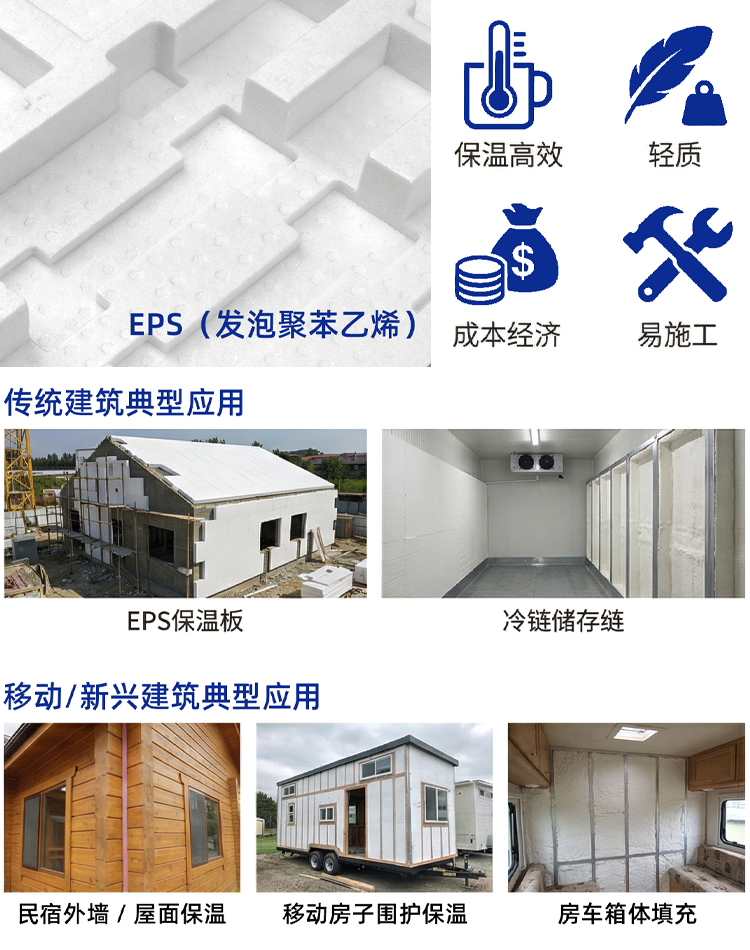
b. Material: Lightweight grade EPS + EPP fireproof composite layer
c. Core Benefits: Low thermal conductivity, meeting Grade 1 energy efficiency standards; high-grade flame retardant frame complies with mainstream fire protection codes, significantly improves construction efficiency, and ensures long-term stable thermal insulation performance with low water absorption.
d. Application Scenarios: Exterior walls of residential / public buildings, B&B exterior wall thermal insulation
e. Image: Actual shot of EPS exterior wall thermal insulation construction for B&B
Roof & Underground Space Thermal Insulation
a. Pain Points: Roof aging from sun exposure, damp and moldy underground space.
b. Material: High-density MPPE + EPS composite.
c. Core Benefits: MPPE features high temperature resistance and excellent compressive performance; EPS provides moisture-proof and anti-condensation performance, with additional sound insulation effect, significantly improving living comfort.
d. Application Scenarios: Flat / sloped roofs of conventional buildings, B&B underground storage rooms, mobile house roof thermal insulation.
e. Image: Schematic diagram of conventional building roof insulation structure + B&B underground space thermal insulation.
1.Building Envelope Thermal Insulation System
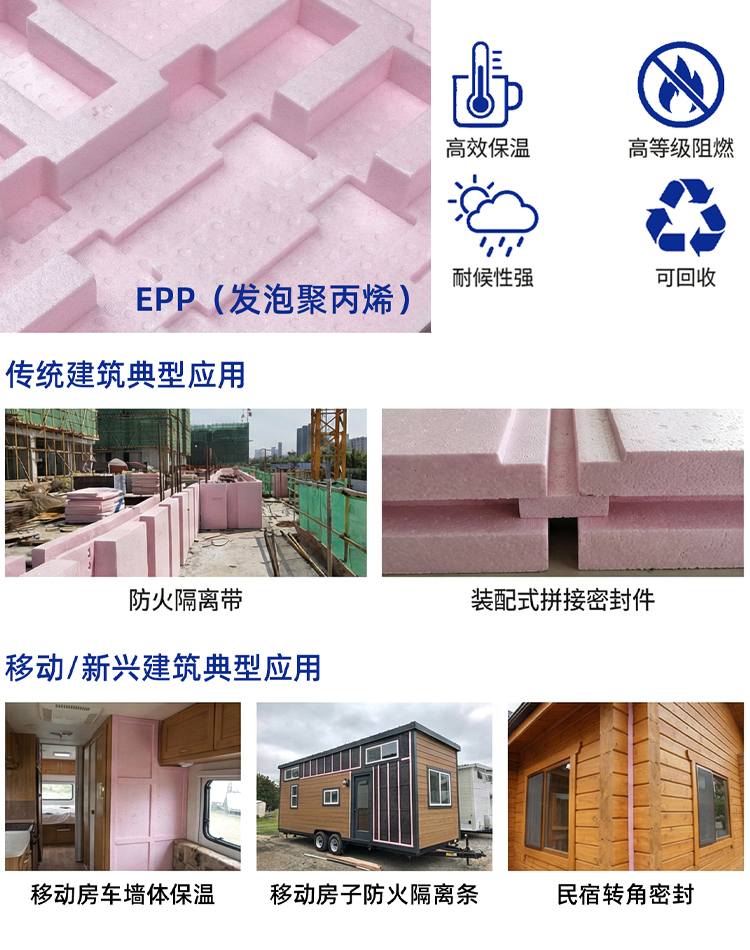
Fire Protection Isolation Belts & Fire Stopping
a. Pain Points: Vertical fire spread is likely; sealing of pipeline holes is incomplete.
b. Material: Flame-retardant grade EPP.
c. Core Benefits: Code-compliant isolation belts effectively block fire spread; sealing parts exhibit excellent expansion sealing performance, aligning with building fire protection design codes.
d. Application Scenarios: External walls of conventional buildings, pipeline shafts of mobile houses, smoke exhaust duct sealing for B&B kitchens.
e. Image: Installation of EPP fire protection isolation belts.
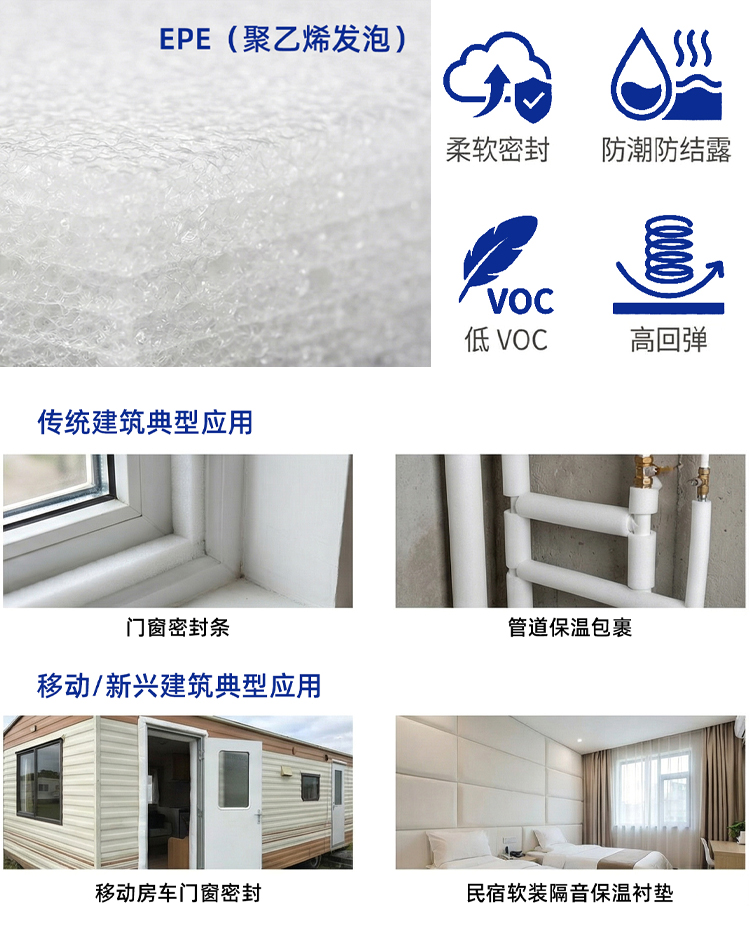
Window & Curtain Wall Sealing & Energy Saving
a. Pain Points: Air and heat leakage through gaps; sealing failure of mobile buildings due to vibration.
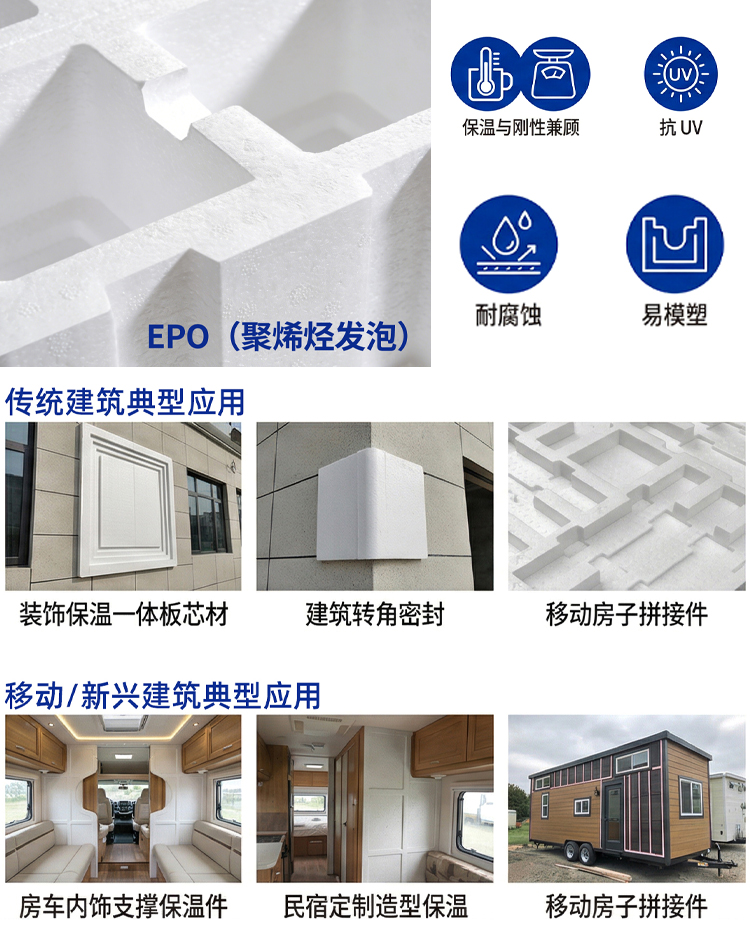
b. Material: EPE composite sealing strips + EPO node filling parts.
c. Core Benefits: Significantly improved airtightness reduces energy consumption; EPO features shock resistance and resistance to shrinkage and cracking, adapting to the frequent movement requirements of mobile houses.
d. Application Scenarios: Windows of conventional buildings, curtain walls, B&B exterior walls, window frame sealing of mobile houses.
e. Image: Installation of EPE sealing strips for mobile houses.
a. Pain Points: Cold air leakage leads to high energy consumption; high requirements for moisture and mold resistance.
b. Material: High-density EPS insulation boards + EPP sealing structure
c. Core Benefits: Stable maintenance of low-temperature environments; integrated insulation with seamless joints, providing excellent moisture and mold resistance for long service life.
d. Application Scenarios: Food/pharmaceutical cold storage, cold chain logistics warehouses.
e. Image: Schematic diagram of EPS insulation structure for cold storage
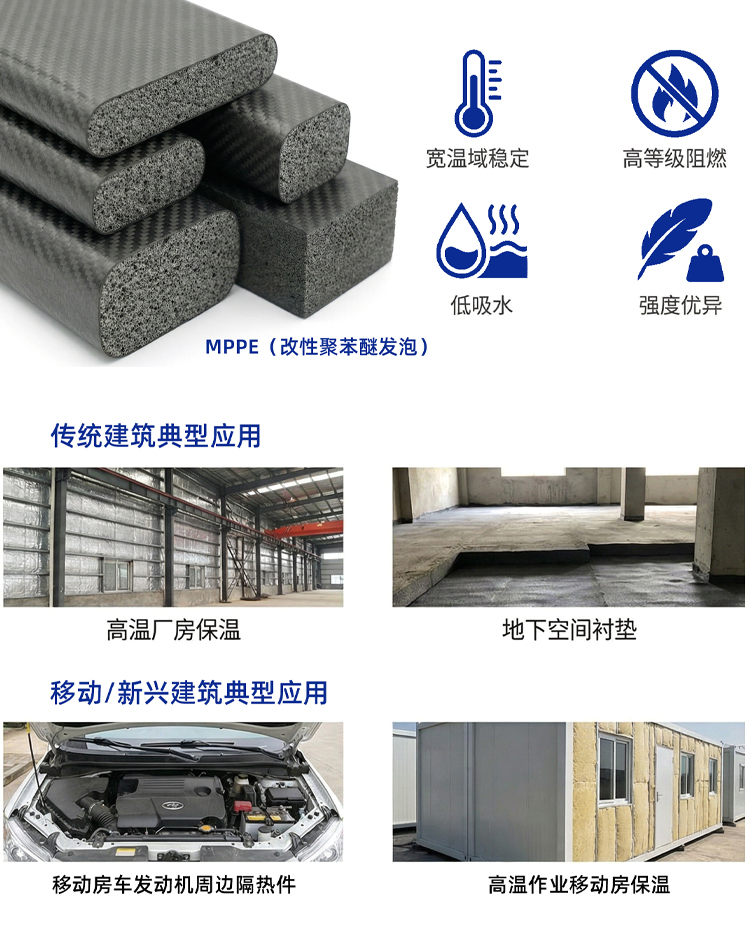
High-Temperature Industrial Plant Insulation
a. Pain Points: High heat transfer damages components; chemical corrosion shortens material service life.
b. Material: MPPE insulation layer + EPO protective parts.
c. Core Benefits: Effectively blocks high-temperature heat transfer; excellent chemical corrosion resistance, adaptable to complex equipment contours.
d. Application Scenarios: Metallurgical/chemical plants, insulation around industrial equipment.
e. Image: Actual shot of MPPE insulation parts in high-temperature plants.
a. Pain Points: Space constraints require lightweight design; vibration easily dislodges seals; inconsistent thermal insulation affects endurance.
b. Materials: Lightweight EPP + EPS composite + EPE seals.
c. Core Benefits: The EPP/EPS composite offers excellent thermal performance while significantly reducing weight compared to traditional materials, lowering energy consumption. The high-resilience EPE seals resist vibration and stay intact even with long-term use in mobile applications.
d. Applications: Self-propelled/towed mobile homes, campsite mobile pods.
e. Image: Disassembly diagram of mobile home insulation system.
Rapid Assembly & Insulation for Modular Buildings
a. Pain Points: Requires quick, all-in-one assembly, sealing, and insulation; needs resistance to impact and vibration.
b. Materials: Custom-molded EPP connectors + EPS insulation + EPS enclosure.
c. Core Benefits: EPP precision-molded components enable fast, leak-free assembly, greatly improving efficiency. The EPP/EPS combination offers thermal insulation, impact resistance, and high flame retardancy.
d. Applications: Modular buildings, emergency shelters, campsite facilities.
e. Image: Installation photo of EPP connectors for modular buildings.
Energy Efficiency & Comfort for Homestays
a. Pain Points: Need for a "low-carbon, green" brand identity; thermal and acoustic insulation are both required; flexible designs are preferred.
b. Materials: EPS exterior/roof insulation + EPE soundproof liners + custom-molded EPP components.
c. Core Benefits: Reduces energy consumption significantly and provides effective high-frequency noise reduction. EPP can be shaped to fit unique homestay designs (sloped roofs, curved corners), and is low-VOC, odor-free, and meets residential standards.
d. Applications: Rural homestays, glamping sites, themed accommodations.
e. Image: Close-up of EPS roof insulation and curved EPP corner details for homestays.
4.Adaptation Scenarios for Mobile/Emerging Buildings